Healthcare
Patient outreach, scheduling, and admin support for healthcare programs — strictly BPO/admin, no clinical involvement
Industry Challenges
What healthcare programs are up against
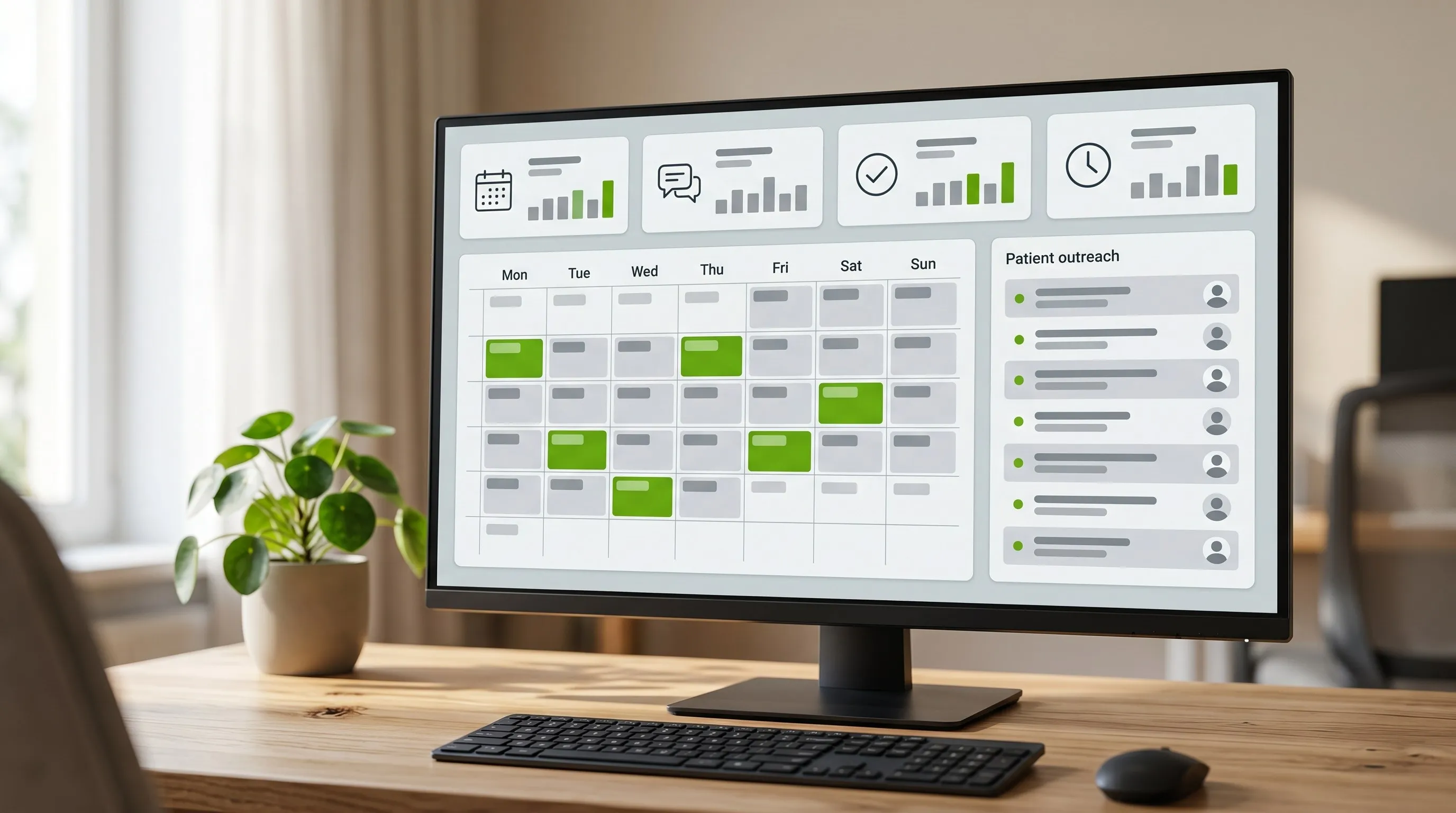
Healthcare administrative programs run on volume most organizations underestimate. Appointment scheduling, patient outreach for follow-ups and reminders, intake coordination, and front-desk-style eligibility inquiries all generate steady contact load — and patient populations aren't a uniform group. Multilingual demand is real. Callers who are elderly, low-income, or unfamiliar with the system need patience and plain-language communication, not a script optimized for speed. Patients notice when the admin layer doesn't work.
No-Show Rates and Rescheduling Churn
Missed appointments generate downstream costs and back-office churn. Outreach programs that remind, confirm, and reschedule at volume can reduce no-show rates, but only if agents can work the contact list efficiently and handle rescheduling without hand-offs that drop the call.
Multilingual Patient Demand
Patient populations in most metro markets include significant non-English-speaking populations. Spanish-language demand is common; in some markets Arabic, Somali, or other languages matter too. Failing to cover those contacts is an access-equity issue, not just a satisfaction one.
Intake Form Processing Volume and Accuracy
Intake coordination requires accurate information capture at volume. Incomplete or incorrect intake data creates downstream problems that cost more to fix than to prevent. The back-office processing workstream — forms, verifications, follow-ups — competes for headcount with live-contact staffing.
Data-Handling Rigor for Admin Workflows
Healthcare administrative programs handle PII. Even without direct PHI access, scheduling and intake workflows touch sensitive patient data. Role-based access controls, structured handling protocols, and clear data minimization are basic table stakes. Any prospect should ask about them.
How We Help
Service lines that fit this industry
Customer Service
Trained agents representing your brand on inbound, outbound, or blended programs
Learn more →Live Chat Support
Real-time chat support on your website or app, handled by trained agents
Learn more →IVR & IVA Services
IVR menus and intelligent virtual agents, built, hosted, and managed for you
Learn more →Surveys & Feedback Programs
Find out what your customers actually think, with structured surveys run by live agents
Learn more →Why Crusecom for Healthcare
Built on government-scale programs serving vulnerable callers
Crusecom's largest active engagements serve the same kinds of populations healthcare admin programs reach. We run Michigan's EBT cardholder support line: 1.4 million recipients a month, 24/7, bilingual English/Spanish and English/Arabic, since 2005. We support an EBT card terminal provider spanning 40-plus states. Retailers across the country call in with payment terminal issues processing SNAP, WIC, and other benefit transactions. We previously ran a federal prepaid benefits card program that peaked above 350 agents. Across active programs we handle roughly 120,000 calls and 300,000 to 400,000 agent-minutes per month at three-minute AHT, with service levels at 95% answered in 24 seconds on one program and 98.5% in 25 seconds on another. Working with elderly, low-income, and in-need callers is the daily operating condition on those programs — and it transfers directly to patient outreach and scheduling.
Healthcare admin is where we operate: scheduling, outreach, intake, eligibility inquiries. Not clinical work. Not triage. We're direct about that boundary with every healthcare prospect. What we bring is the operational backbone to run high-volume, patient-adjacent admin contact at quality and SLA.
Bilingual English/Spanish is staffed in-house. Arabic is in-house on one active program. Other languages run through qualified interpreter services. Most agents work remote, from communities across the US, with on-site capacity at our Oscoda, Michigan headquarters. We don't use offshore delivery, and Crusecom is a certified SDVOSB.
Quick Facts
- Certification
- SDVOSB · SBA-certified
- Delivery
- US-based agents
- Heritage
- Operating since 1998
- Environment
- PCI DSS-compliant
Proof
Where it transfers
Crusecom runs Michigan's EBT cardholder support line at 1.4 million recipients a month and previously ran a federal prepaid benefits card program that peaked above 350 agents. Both run on 24/7 coverage, multilingual staffing, and careful PII handling with populations who are elderly, low-income, or in need. Those same disciplines — patient-appropriate communication, plain-language explanation, multilingual coverage, structured data handling — apply directly to healthcare scheduling, patient outreach, and intake coordination.
FAQ