Ecommerce & Retail
Order support, returns handling, and peak-season scaling for online and omnichannel retailers
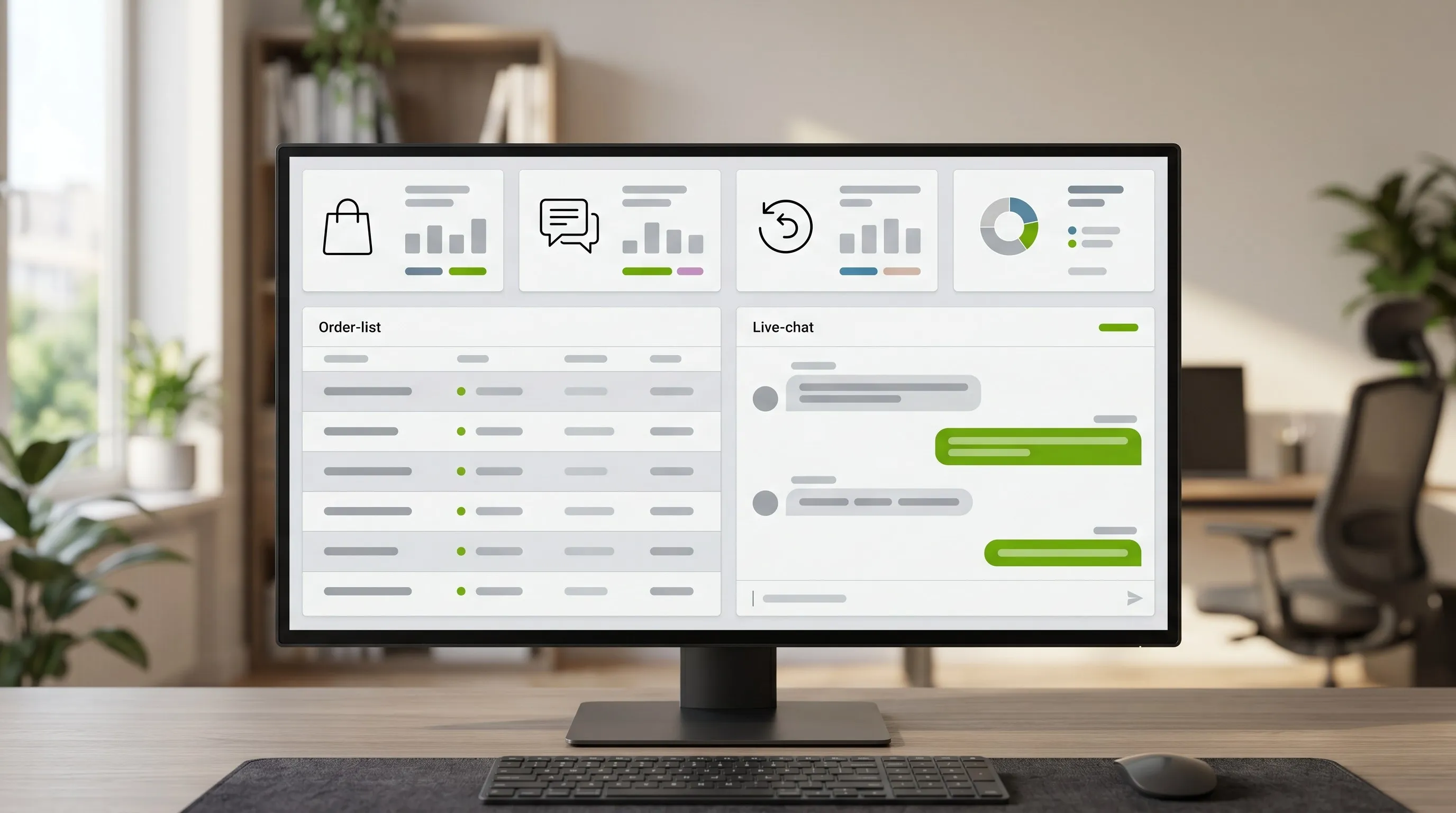
Industry Challenges
What ecommerce & retail programs are up against
Ecommerce customer operations live and die on order accuracy, fast resolution, and channel flexibility. Order status questions, return and exchange requests, payment issues, and delivery exceptions hit across voice, live chat, and email at the same time. Volume swings are severe. Black Friday and the holiday window can push contact volume three to five times baseline in days. Brand voice has to hold across every channel and every agent, or the customer experience fractures in public.
Peak-Season Volume Spikes
Black Friday, holiday season, and major product launches compress enormous contact volume into short windows. Fixed-headcount operations break. Staffing has to flex up fast and back down without compromising handle time or SLA.
Returns and Exchange Workflows
Returns are the highest-friction contact type in ecommerce. Agents need to verify order status, apply the right return policy, initiate exchanges, and close the loop accurately and quickly. Incomplete handling generates follow-up contacts that multiply the original cost.
Live Chat Volume Management
Chat is the primary channel for many ecommerce buyers. Concurrent session loads are unpredictable, and chat resolution requires faster written communication than voice allows. Agents who handle only voice don't transfer cleanly to high-volume chat environments.
Brand-Voice Consistency Across Channels
Customers move between chat, email, and voice on the same order. Inconsistent tone or conflicting information across channels damages trust fast. Consistent brand voice requires structured agent training, monitored QA, and clear escalation protocols, not just a style guide.
How We Help
Service lines that fit this industry
Customer Service
Trained agents representing your brand on inbound, outbound, or blended programs
Learn more →Live Chat Support
Real-time chat support on your website or app, handled by trained agents
Learn more →Email Support
Professional email responses that solve the problem the first time
Learn more →Surveys & Feedback Programs
Find out what your customers actually think, with structured surveys run by live agents
Learn more →Why Crusecom for Ecommerce & Retail
Government-scale cardholder operations — the disciplines translate directly
Crusecom's largest active engagements are public-sector cardholder programs that run at federal scale. We run Michigan's EBT cardholder support line: 1.4 million recipients a month, 24/7, bilingual English/Spanish and English/Arabic, since 2005. We support an EBT card terminal provider whose deployment spans 40-plus states. Retailers across the country call in with payment terminal issues processing SNAP, WIC, and other benefit transactions. We previously ran a federal prepaid benefits card program that peaked above 350 agents. That was the largest cardholder support engagement in our history. Across active programs we handle roughly 120,000 calls and 300,000 to 400,000 agent-minutes per month at three-minute AHT, with service levels at 95% answered in 24 seconds on one program and 98.5% in 25 seconds on another.
Ecommerce customer operations don't run on benefits cards, but the operational disciplines are the same. Surge-tolerant scheduling, structured QA, PCI-aware data handling, brand-voice training, consistent resolution workflows — those are what the cardholder programs above run on every shift. Ecommerce also leans harder on chat and email than most other verticals do. Crusecom runs chat and email as core service lines, not supplemental channels. Vertical-specific work — order management system training, return policy workflows, product-specific escalation paths — is a training load, not a rebuild.
Bilingual English/Spanish is staffed in-house. Arabic is in-house on one active program. Other languages run through qualified interpreter services. Most agents work remote, from communities across the US, with on-site capacity at our Oscoda, Michigan headquarters. We don't use offshore delivery, and Crusecom is a certified SDVOSB.
Quick Facts
- Certification
- SDVOSB · SBA-certified
- Delivery
- US-based agents
- Heritage
- Operating since 1998
- Environment
- PCI DSS-compliant
Proof
Where it transfers
Crusecom runs Michigan's EBT cardholder support line at 1.4 million recipients a month and previously ran a federal prepaid benefits card program that peaked above 350 agents. Both run on 24/7 coverage, PCI-DSS-compliant data handling, and surge-tolerant staffing that flexes without breaking SLAs. Chat and email are core service lines, not add-ons. The disciplines those programs run on translate directly to ecommerce order support, returns handling, and peak-season operations.
FAQ